
Three problems in chemical development.
The work spans three different problems: carrying heat away from electronics, forming amide bonds, and changing how agricultural ingredients behave in a solid formulation. Each application describes proposed chemical structures, the reasoning behind their selection, and methods for preparing and evaluating them.
The specifications report computational studies and chemical design work. Their synthesis and performance-testing examples are proposed experiments; experimental validation remains to be completed.
Ester chemistry for immersion cooling.
In single-phase immersion cooling, electronic hardware sits directly in a liquid that carries heat to a heat exchanger. The fluid needs to transfer heat, flow through the system, and remain compatible with electrical equipment.
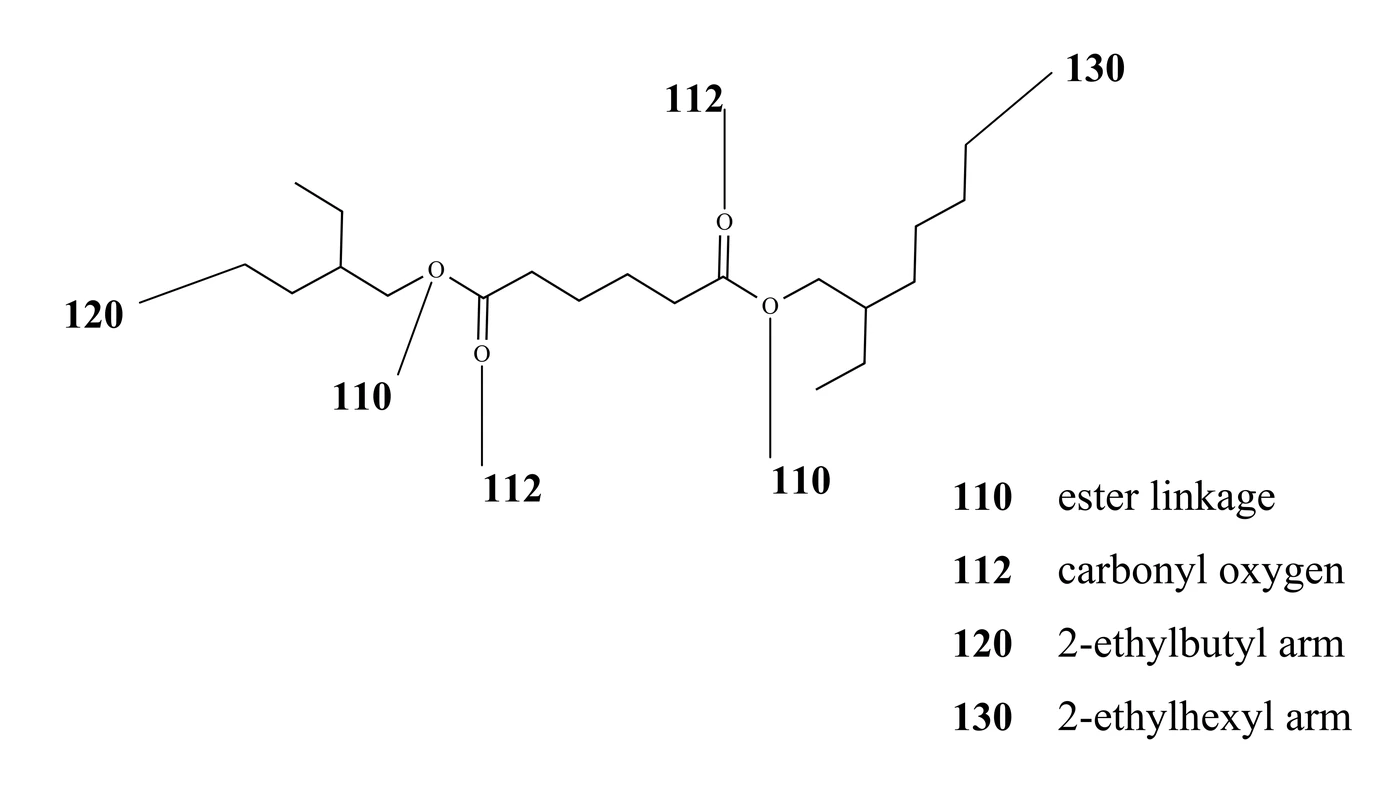
This application describes asymmetric ester compounds as candidate base fluids. Its lead candidate, C-05, joins an adipic-acid backbone to two different branched arms. The disclosed base compounds contain no fluorine, making them PFAS-free candidates by molecular structure.
 View drawing (opens in a new tab)
Molecular design
The disclosure identifies 34 compounds and compares calculated properties. Different ester arms are explored as a way to influence crystallization behavior; any resulting benefit requires measurement.
From a candidate to a cooling fluid
Proposed preparation and formulation methods are paired with tests for viscosity, electrical behavior, ageing, and material compatibility.
Catalyst design for direct amidation.
Direct amidation joins a carboxylic acid and an amine to form an amide bond. Some substrates can bind strongly to a catalyst and interfere with the reaction. This application proposes boron precatalysts for investigating that problem.
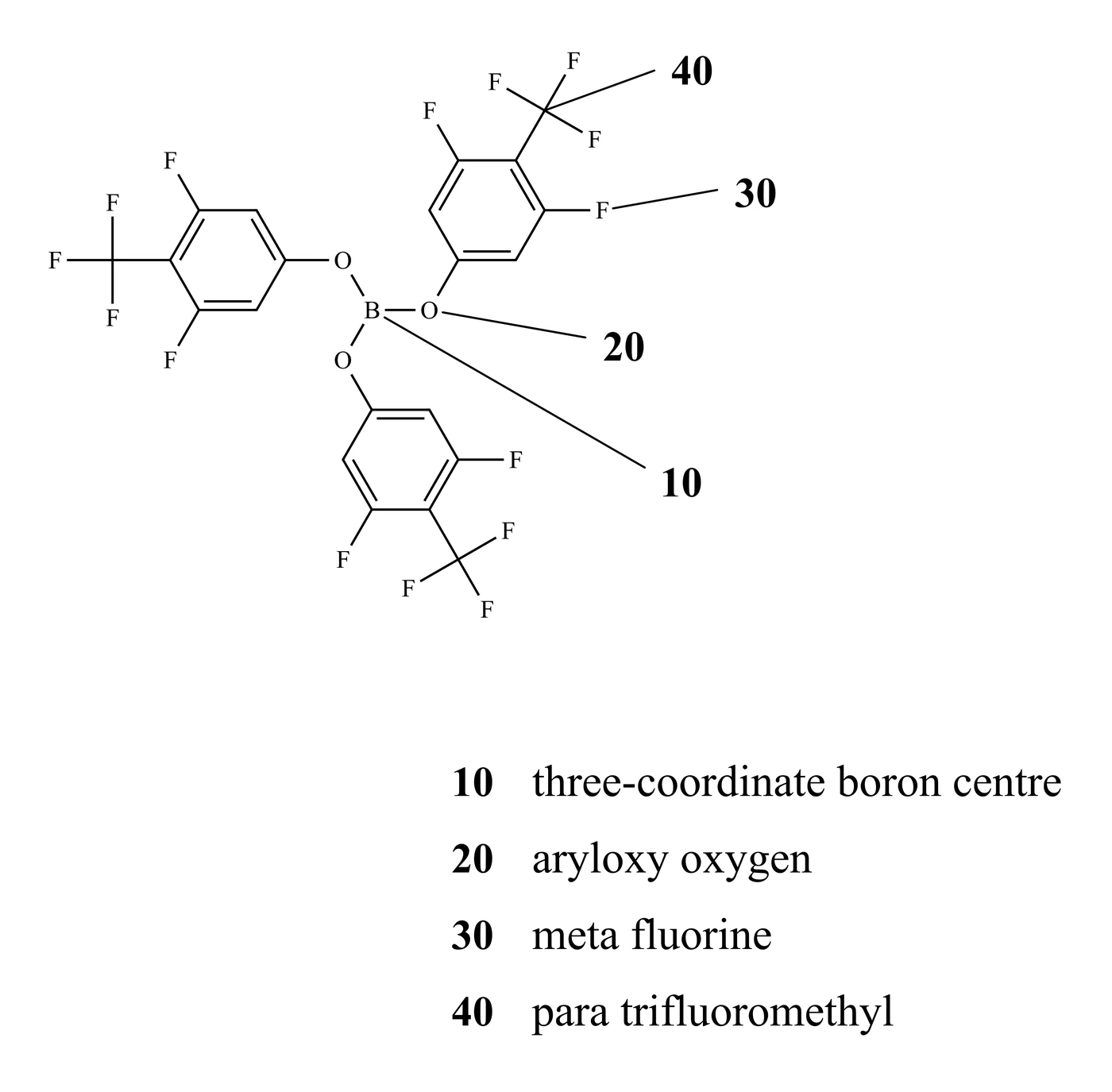
The two named candidates, A1 and ACl, place three oxygen-linked aromatic groups around boron. Their substituents are chosen to vary the electronic environment while leaving the positions next to each linking oxygen unobstructed.
 View drawing (opens in a new tab)
Two related candidates
A1 uses a trifluoromethyl group at the para position of each aromatic ring; ACl uses chlorine. Both retain fluorine at the two meta positions. The application describes their preparation and use as precatalysts.
The experimental question
The proposed studies compare amidation performance, including reactions with coordinating substrates. Activity, yield, and selectivity have not been established for A1 or ACl in this application.
Crystal design for crop protection.
A cocrystal brings different molecules into a shared crystal lattice. Changing that arrangement offers a way to investigate dissolution and physical storage behavior in agricultural formulations.
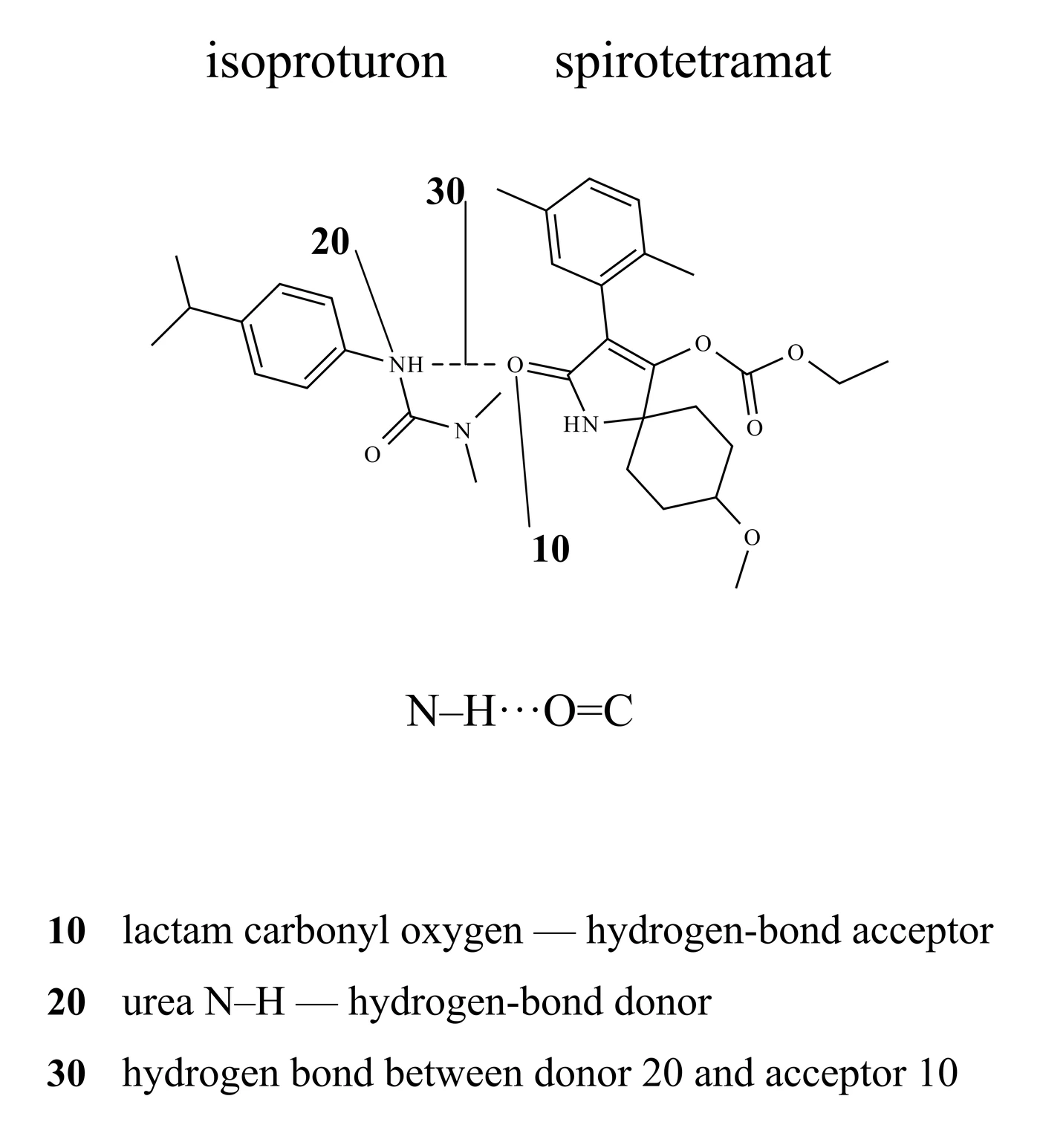
This application studies spirotetramat with isoproturon and related urea coformers. The principal candidate combines spirotetramat and isoproturon in a 1:1 molar ratio, with a proposed hydrogen bond between the two molecules.
 View drawing (opens in a new tab)
Computational crystal design
The work evaluates hydrogen-bond propensity for 38 pairs from a library of 35 agricultural actives, then explores 136 candidate crystal packings for the principal pair. These calculations guide proposed laboratory preparation and characterization.
Formulation behavior to investigate
The application outlines preparation methods and suspension-concentrate tests to investigate particle growth and physical storage behavior.